From Iron Beam lasers to UPI payments and precision agriculture, here are the main sectors in India and Israel set to benefit from PM Modi’s February 2026 visit and the new Special Strategic Partnership.
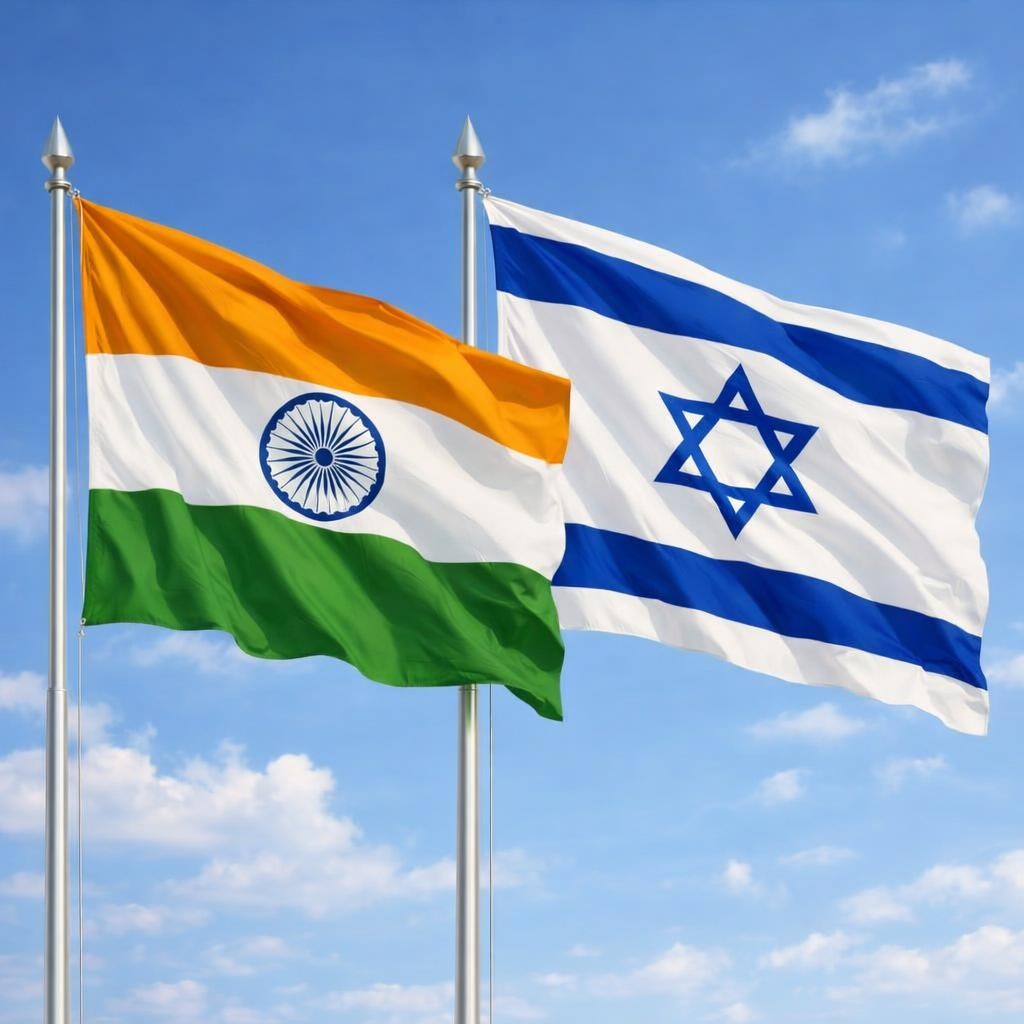
When Prime Minister Narendra Modi touched down at Ben Gurion Airport on 25 February 2026, the optics were historic — but the substance was even more so. Over two days in Israel, Modi became the first Indian premier to address the Knesset, received the Speaker’s Medal, and oversaw the signing of a package of agreements that produced 27 bilateral outcomes, including 16 agreements and 11 joint initiatives spanning critical and emerging technologies, labor mobility, agriculture, culture and education. The two countries formally elevated their relationship from a “strategic partnership” to a “special strategic partnership.”
For business leaders, investors, and policymakers in both Tel Aviv and New Delhi, the real question is simple: which sectors actually stand to benefit? Here are the main areas where Modi’s visit will translate into concrete gains on both sides.
1. Defence and advanced military technology
Defence is the bedrock of the India-Israel relationship, and the 2026 visit has widened the aperture dramatically. India-Israel trade jumped from $200 million in 1992 to $6.5 billion in 2024, and India is now Israel’s second-largest Asian trading partner after China and Israel’s largest arms customer globally. The Modi visit builds on that foundation with next-generation systems.
The headline item is Iron Beam, a 100kW-class high-energy laser weapon inducted into the Israeli military in December 2025 that represents cutting-edge directed-energy technology with applications against drones, rockets, and missiles. For India — which faces persistent drone and missile threats along two contested borders — access to directed-energy weapons is a genuine force multiplier. A November 2025 memorandum of understanding already provides for joint development and joint production of military equipment, with an emphasis on transfer of advanced technology.
Winners on the Israeli side: Rafael, Elbit Systems, Israel Aerospace Industries — all of whom gain a deep-pocketed, long-term customer and co-production partner.
Winners on the Indian side: The “Make in India” defence ecosystem, with Indian private-sector primes and DRDO labs gaining technology transfer on systems that would take a decade to develop domestically.
2. Critical and emerging technologies — AI, quantum, cyber
Perhaps the most strategically significant announcement was the creation of a Critical and Emerging Technologies Partnership. Modi announced the partnership would give new momentum to cooperation in areas such as AI, quantum, and critical minerals, and the two sides launched an Indo-Israel Cyber Centre of Excellence to be set up in India, with a joint initiative in critical and emerging technologies to be led by their national security advisors.
Israel brings world-class talent in cybersecurity, AI applications, and quantum research from institutions like the Weizmann Institute and Technion. India brings scale: engineering talent pools, data centres, and a domestic market of 1.4 billion people. The combination is the kind of complementarity that works.
3. Fintech and digital payments — UPI goes global
One of the most quietly consequential agreements concerns payments. The National Payments Corporation of India (NPCI) and Israel’s MASAV signed a partnership to enable Unified Payments Interface (UPI) acceptance in Israel, facilitating cross-border digital transactions.
For India, this is another export win for UPI — already operational in the UAE, France, Singapore, and Sri Lanka. For Israel, which has a sophisticated fintech sector but a relatively small domestic market, it opens the door to seamless transactions with Indian tourists, workers, and business travellers. Expect Israeli merchants, hotels, and retailers in Tel Aviv, Eilat, and Jerusalem to be early adopters.
4. Agriculture and water technology
Agriculture has always been the “soft power” anchor of India-Israel ties, and the 2026 visit deepened it significantly. The India-Israel Innovation Centre for Agriculture (IINCA), a new centre under the Indian Council of Agricultural Research (ICAR) and Israel’s MASHAV, will focus on precision farming, irrigation technologies and crop studies. A separate MoU covers sustainable fishery technologies and aquaculture innovation.
Israel’s drip irrigation and desalination expertise addresses India’s most acute rural challenge: water stress. For Indian farmers in Maharashtra, Rajasthan, and Punjab, the downstream benefit could be measured in higher yields and lower water consumption. For Israeli agritech firms like Netafim and Rivulis, India is the largest addressable market on Earth.
5. Labour mobility and people-to-people ties
Amid sanctions on some traditional migrant flows and an Israeli construction sector desperate for workers, labour mobility has become a practical pillar of the relationship. The two sides agreed on facilitating the employment of over 50,000 Indian workers in Israel over the next five years. The visit highlighted the contribution of the Indian caregiver and construction sectors to Israel.
For Indian workers, this means formal, regulated employment at wages multiples higher than domestic alternatives. For Israeli construction and elder-care sectors, it means relief from an acute labour shortage. Remittances flowing back to India — likely to run into hundreds of millions of dollars annually once fully scaled — become an indirect economic tailwind for states like Kerala, Punjab, and Uttar Pradesh.
6. The Free Trade Agreement — the horizon prize
The largest prize is still ahead. The first round of FTA negotiations concluded successfully in New Delhi, with the next round scheduled for May, and Modi told the media a deal would be finalized “soon.” An FTA would unlock tariff reductions across pharmaceuticals, gems and jewellery (India’s top export to Israel), chemicals, and machinery — potentially doubling bilateral trade within five years.
The bottom line
Modi’s visit was not just ceremony. It was a structured, sector-by-sector deepening of a relationship that already punches well above its weight. Defence firms, AI labs, fintech platforms, agritech innovators, construction companies, and eventually every exporter in both economies stand to benefit. The “special strategic partnership” is a diplomatic label, but the agreements underneath it are a business plan. For entrepreneurs and executives in Bengaluru, Tel Aviv, Mumbai, and Herzliya, the message is clear: the corridor between India and Israel has just gotten much wider, and the companies that move first will reap the most.
David Cohen 8/04/2026
 Crosswinds - David Cohen
Leave a comment