by David Cohen
Forty days into the US-Israel war on Iran, the case for action is clearer than ever. As the conflict pauses for the current ceasefire, I look at why this conflict is existential — and why Israel had no other choice.
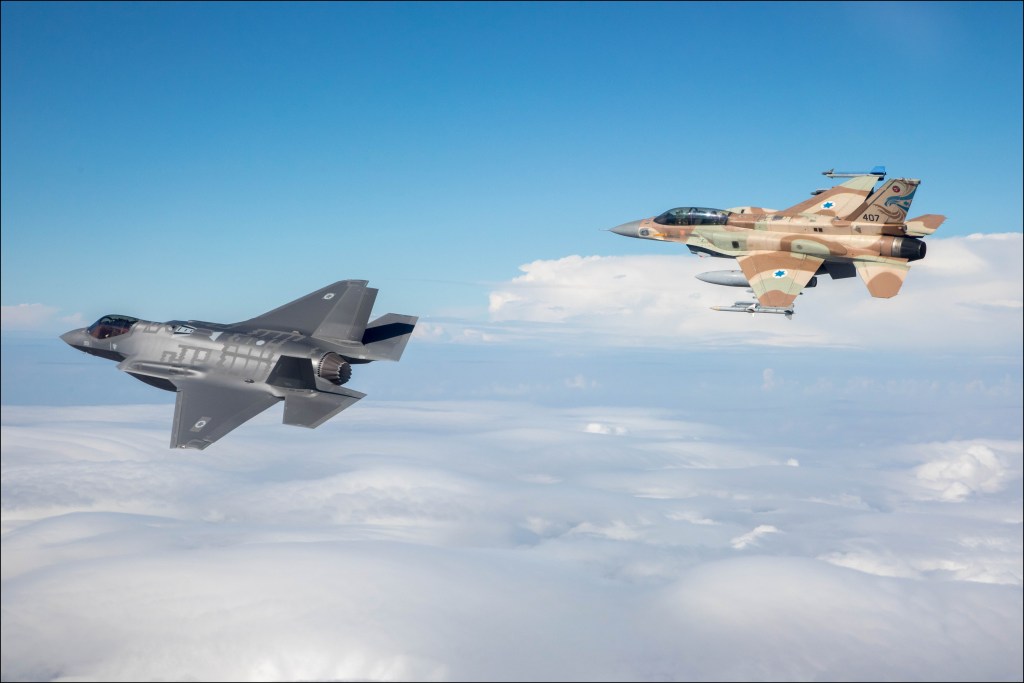
Why Israel’s War Against Iran Is Justified — and Necessary for Its Survival
Forty days into the war that began on 28 February 2026, when Israeli and American jets opened a coordinated campaign across Iran, the world is once again split into two camps. One camp counts the casualties, points to the rubble in Tehran’s residential districts, and demands an immediate ceasefire. The other camp — the one I belong to — looks at the four decades of slow-motion siege that preceded this war and asks a harder question: what, exactly, was Israel supposed to do instead?
This is not a comfortable position to hold. Wars are ugly. Civilians have died at the Mahshahr Petrochemical Zone, universities have been struck, and residential neighbourhoods in Tehran province have been hit. None of that is to be celebrated. But the moral seriousness of war does not begin and end with the images of the past forty days. It begins with the decades of threats, proxy attacks, and nuclear advancement that made this moment effectively unavoidable.
The threat was never theoretical
For years, defenders of restraint argued that Iran’s hostility toward Israel was rhetorical — that “Death to Israel” chants in Tehran were performative, that the regime was rational, that containment would work. That argument collapsed in stages. It collapsed on 7 October 2023, when Iranian-backed Hamas executed the worst single-day massacre of Jews since the Holocaust. It collapsed again with each Hezbollah rocket barrage from Lebanon and each Houthi missile fired from Yemen — all of them funded, armed, and coordinated by Tehran.
And then it collapsed, finally and completely, on the nuclear question. In late February 2026, the International Atomic Energy Agency reported that Iran had stored highly enriched uranium in an underground facility that was undamaged in the previous round of fighting. The IAEA could not verify that Iran’s program was peaceful because Iran had denied them access. A regime that openly calls for the destruction of a neighbouring state, that funds the militias attacking that state on three fronts, and that simultaneously refuses inspection of its enriched uranium stockpiles is not a regime that can be appeased. It is a regime that must be confronted before it acquires the one weapon that would make confrontation impossible.
The window was closing
Critics of the war argue that diplomacy was not exhausted. This is, frankly, a fantasy. Indirect negotiations in February failed, and although the mediating Omani foreign minister had reported significant progress, President Trump said he was “not thrilled” with the talks. More importantly, every previous round of diplomacy — from the 2015 JCPOA onward — had bought Iran time, not compliance. Each pause in pressure was used to expand the program, not to dismantle it.
By early 2026, the strategic picture had shifted decisively. Iran was arguably at its weakest point in years: extensive protests in early 2026, motivated by a weakened economy and struggling infrastructure, illustrated the regime’s eroded legitimacy at home, while Israeli military action since 2023 had significantly weakened many of Iran’s regional allies. Hezbollah had been gutted. Lebanon’s Council of Ministers eventually decided to ban the military and security wing of Hezbollah and called for them to hand over their weapons — a development that would have been unthinkable two years earlier. The Assad regime in Syria was gone. The Iranian rial had collapsed.
In strategic terms, this was the window. Wait another year, and Iran would have rebuilt its proxies, restored its economy, and possibly crossed the nuclear threshold. The choice was not between war and peace. It was between war now, on favourable terms, or war later, against a nuclear-armed Iran. Anyone serious about Israel’s long-term survival understands which option is morally and strategically preferable.
What “existential” actually means
The word “existential” gets thrown around carelessly in geopolitics, but for Israel it has a precise meaning. Israel is a country roughly the size of New Jersey, with a population of under ten million, surrounded by states and movements that have, at various points, declared their intention to destroy it. A single nuclear weapon detonated over Tel Aviv would not merely damage Israel — it would end the Jewish state as a viable entity. There is no margin for the kind of “absorb the first strike and retaliate” doctrine that protected the United States during the Cold War. Geography forbids it.
This is why Israeli strategic culture has always treated red lines on weapons of mass destruction as non-negotiable. It is why Menachem Begin destroyed Iraq’s Osirak reactor in 1981, an act condemned at the time and quietly thanked a decade later when Saddam Hussein invaded Kuwait. It is why Israel struck Syria’s al-Kibar reactor in 2007. The doctrine — the Begin Doctrine — is simple: Israel will not allow its declared enemies to acquire the means of its annihilation. The 2026 war is the application of that doctrine to the most dangerous case yet.
The American role
The American partnership in this war matters enormously. President Trump’s State of the Union address on 24 February 2026 stated that Iran had restarted its nuclear program and was developing missiles capable of striking the US, framing the conflict not as a favour to Israel but as a matter of direct American interest. This framing is correct. A nuclear Iran would not just threaten Israel; it would trigger a regional arms race, with Saudi Arabia, Turkey, and Egypt all likely to pursue their own programs. It would embolden every adversary of the United States from Caracas to Pyongyang. And it would put American forces and allies across the Gulf permanently under nuclear shadow.
The Strait of Hormuz crisis underlines the point. Iran responded to the war by closing the Strait of Hormuz, disrupting global trade — demonstrating exactly the kind of regional chokehold a fully empowered Iran would wield as a matter of routine. Better to break that capacity now than to negotiate with it later.
The hard part
None of this makes the human cost easier to look at. The deaths of children in Baharestan county are a tragedy. The displacement in Lebanon is a tragedy. So is every Israeli killed by an Iranian missile in Haifa or Beersheba. A serious defender of this war does not pretend otherwise. What a serious defender does insist on is moral clarity about cause and effect: this war did not begin on 28 February 2026. It began decades ago, when the Islamic Republic adopted the destruction of Israel as a foundational principle of state. Everything since has been Israel buying time. The 2026 campaign is the moment when buying time stopped working.
History will judge this war the way it judged Osirak. Loudly condemned in the moment, quietly vindicated in the decades that followed. Israel did not start this fight. It is finishing it — because the alternative is not peace, but a delayed and far more terrible war.
 Crosswinds - David Cohen
Leave a comment